If you have ever driven through Newport Beach and wondered why one street feels classic and cottage-like while another feels sleek and modern, you are noticing one of the city’s defining traits. Newport Beach is not shaped by a single look. It is a collection of distinct villages, each with its own architectural rhythm, materials, and sense of place. This guide will help you understand the home styles that define Newport Beach, what those styles often mean for daily living, and what buyers and sellers should pay attention to as they move through the market. Let’s dive in.
Newport Beach Has No Single Style
Newport Beach is often best understood as a city of villages rather than a city with one uniform architectural identity. The city highlights places like the Balboa Peninsula, Balboa Island, Corona del Mar, Lido Marina Village, Newport Center, and Newport Coast as areas with different character and appearance.
That mix makes the local housing market especially interesting. As the city evolved from beach cottages and visitor-oriented development to postwar neighborhoods, hillside homes, and newer planned communities, architecture changed with it. Some properties are even recognized as historic resources, which adds another layer to how certain homes are viewed and maintained.
Coastal Contemporary Homes in Newport Beach
What coastal contemporary looks like
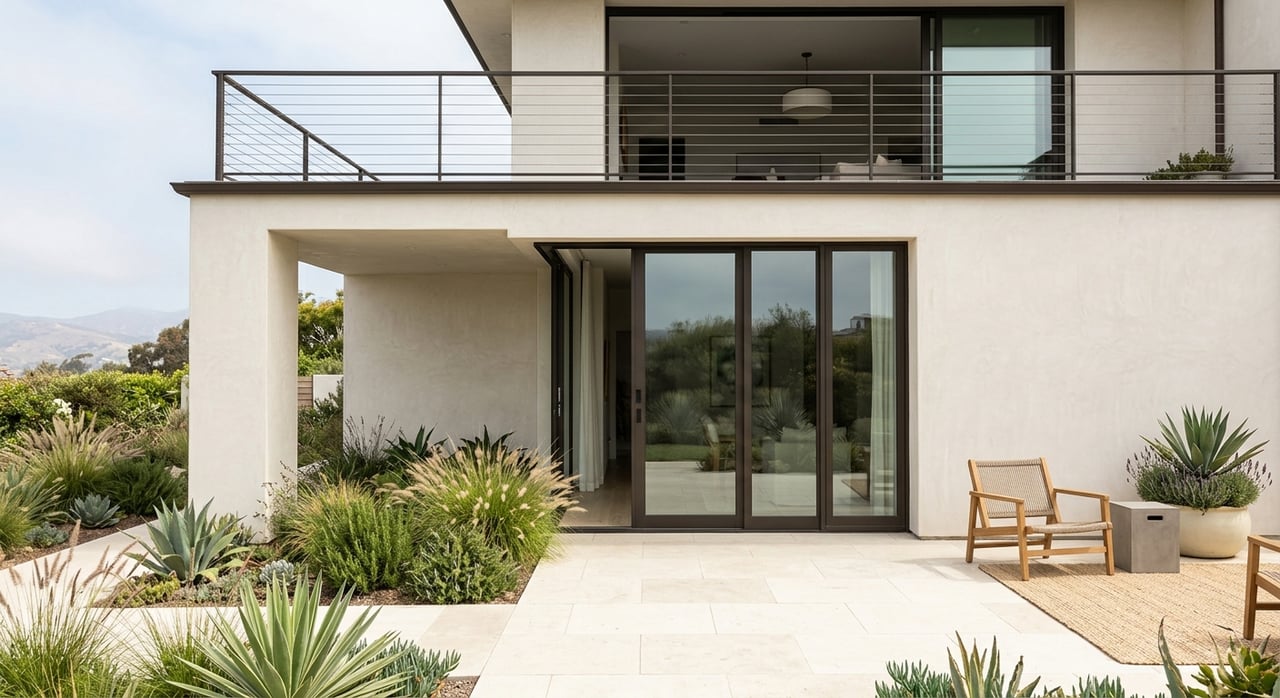
Coastal contemporary is one of the clearest visual signatures in Newport Beach today. While it is more of a local market term than a formal historic label, city planning materials describe contemporary and modern-contemporary buildings with clean massing, large expanses of glass, terraces, courtyard-focused layouts, and neutral palettes.
You will also often see mixed materials such as wood siding, brick, and metal. These homes tend to feel open, bright, and closely connected to the outdoors. In a coastal setting like Newport Beach, that design approach fits the lifestyle as much as the setting.
What coastal contemporary means for living
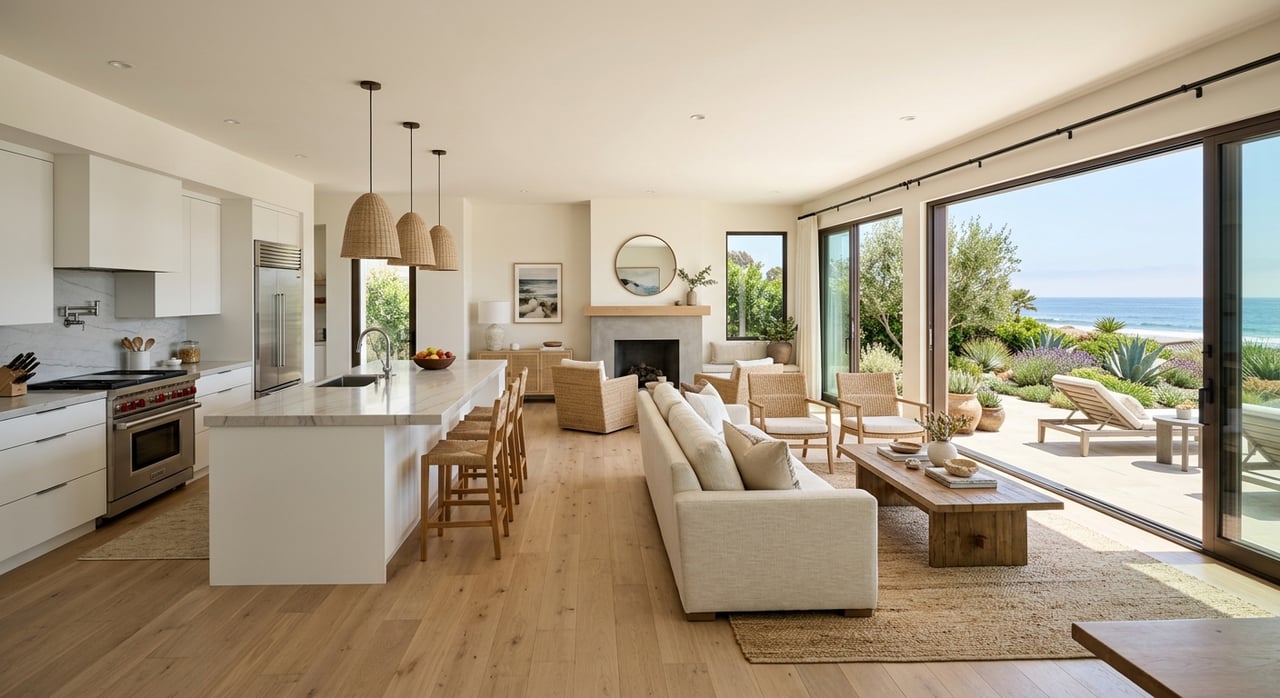
For many buyers, this style signals light-filled interiors and easy indoor-outdoor flow. Large windows, terraces, and open gathering areas can make the home feel calm and expansive, especially when views or natural light are part of the design.
If you are comparing homes, this style often appeals to people who want a current look with simple lines and a strong connection to outdoor space. It can also offer a more edited, minimal feel than some of the city’s more traditional styles.
Mediterranean and Spanish Revival Influence
Why these styles fit Newport Beach
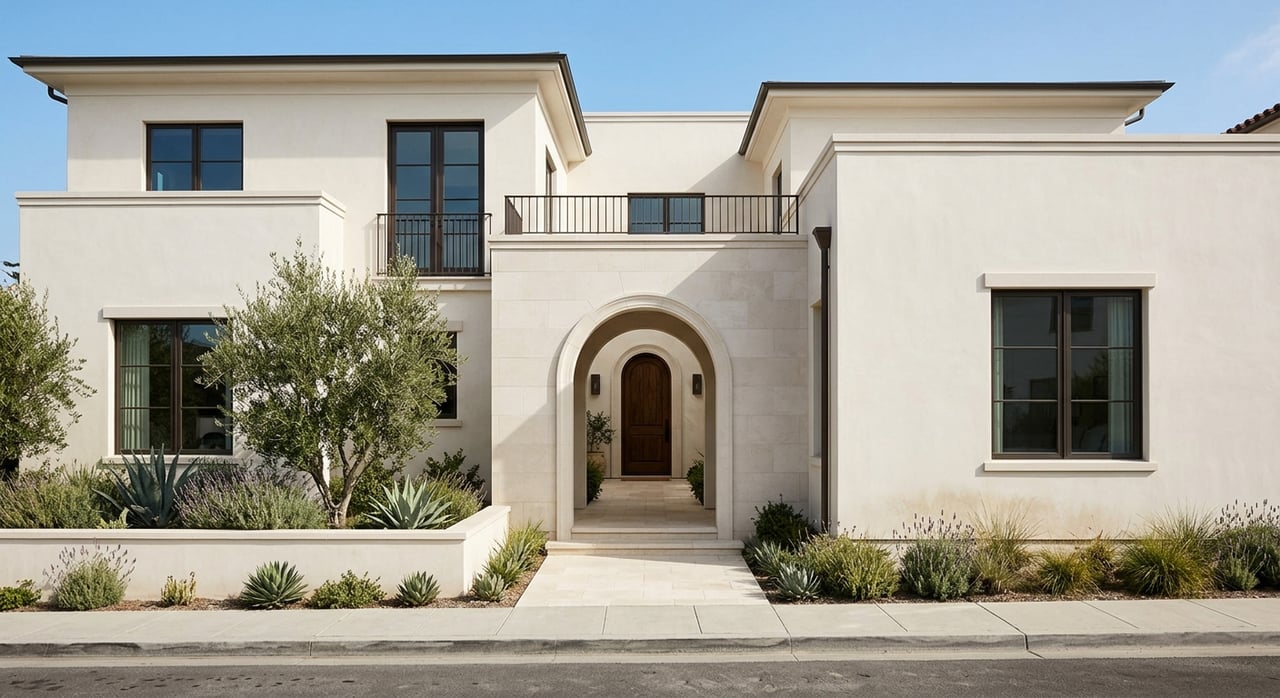
Mediterranean and Spanish Colonial Revival influences have a strong place in Newport Beach, especially in hillside and view-oriented settings. City planning materials for Newport Coast describe the area’s architectural character as derived from Mediterranean hillside communities.
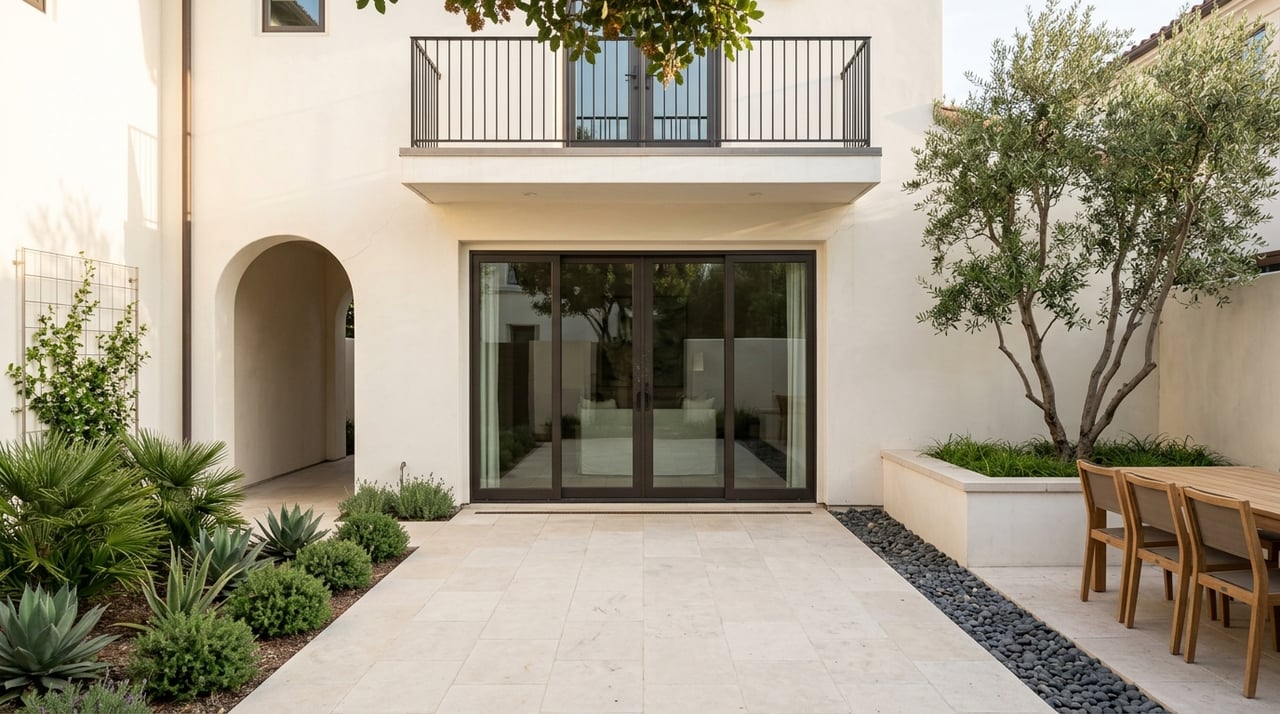
That influence shows up in homes and buildings with tile roofs, stucco finishes, soft neutral colors, white detailing, arched openings, balconies, and masonry elements. In some areas, these details feel formal and timeless. In others, they feel relaxed and coastal.
Key details to notice
If you are touring homes in this style, pay attention to a few defining features:
- Clay tile roofing
- White or light stucco exteriors
- Arched windows or entryways
- Courtyards and terraces
- View-oriented decks or balconies
These homes often balance elegance with outdoor living. In Newport Beach, that can mean spaces that feel resort-like without losing a residential feel.
Cape Cod and Beach Cottage Traditions
The roots of Newport Beach cottage architecture
Some of Newport Beach’s most recognizable charm comes from its cottage traditions. The city’s cottage-preservation program defines cottages as smaller residential dwellings that reflect traditional development patterns in older areas such as Corona del Mar, Balboa Island, and the Balboa Peninsula.
These homes are typically one story with a small second story above rear parking. Their scale is part of their identity. Rather than feeling grand, they often feel compact, personal, and tied to the original beach-town pattern of development.
Where cottage character still matters
This style remains important because it represents a historic layer of Newport Beach living. The city’s preservation efforts show that these homes are valued not just as real estate, but as part of the built character of certain neighborhoods.
Nearby Crystal Cove strengthens that local cottage story. Its historic district includes 46 vintage rustic coastal cottages that began as a seaside colony in the 1930s and 1940s. While Crystal Cove is distinct, it reinforces how deeply cottage living is woven into the broader coastal identity of the area.
Cape Cod influence in Newport Beach
Cape Cod also appears in the historical record of Newport Beach. In general, Cape Cod cottages are known as compact rectangular homes, usually one or one-and-a-half stories, with steep gable roofs.
In Newport Beach, that means you may find homes that feel traditional and simple, with forms that read clearly from the street. For buyers, these properties can offer a classic coastal look that feels more intimate than a larger contemporary or Mediterranean house.
Mid-Century Modern as a Specialty Style
Mid-century modern is not the dominant citywide look in Newport Beach, but it holds an important place in the local architectural story. The city’s historic inventory includes the Solar House on Balboa Island, identified as a John Lautner work and noted as an excellent example of Modernist residential architecture.
This matters because it shows that Newport Beach includes architecturally significant modern homes alongside its better-known coastal and Mediterranean forms. Mid-century design is often associated with clean lines, functionality, organic shapes, and strong connections to light.
For you as a buyer, this style can feel very different from a cottage or Spanish-inspired home. It may offer a more design-driven layout, open planning, and distinctive architectural details that stand out in a market where newer coastal contemporary homes often draw the most attention.
Traditional and Eclectic Seaside Styles
Why Newport Beach can feel varied
Part of Newport Beach’s appeal is that it does not feel stylistically frozen. City design guidelines for Balboa Village describe an eclectic mix that includes Art Deco, Balboa Beach Cottage, and Main Street commercial forms.
In newer planned settings, traditional architecture may draw inspiration from Georgian, Italianate, Colonial Revival, Tuscan, Italian Renaissance, and Monterey sources. At the same time, city guidelines note that these styles should not be literal copies of historic architecture.
What that means for buyers
This creates a market where some homes feel classic without feeling old-fashioned. You may see a house with traditional massing, balanced windows, and familiar detailing, but interpreted in a cleaner, more current way.
That blend can be especially appealing if you want timeless character with a more updated finish. It also helps explain why Newport Beach neighborhoods can feel layered rather than repetitive.
How Architecture Shapes Daily Living
Floor plans and room flow
Style in Newport Beach is not just about curb appeal. It also influences how a home lives day to day. Cottage forms usually mean smaller footprints and less vertical mass, while contemporary and Mediterranean homes are more likely to feature open layouts, courtyard-centered plans, and outdoor rooms.
That can affect everything from entertaining to privacy to storage. If you prefer cozy and compact, a cottage may feel right. If you want broader living areas and a more expansive flow, contemporary or Mediterranean designs may align better with your goals.
Natural light and outdoor connection
Across Newport Beach, design documents consistently emphasize scenic views, public view protection, large windows, and view-oriented decks, balconies, and roof patios. That means natural light and indoor-outdoor living are not niche preferences here. They are central design priorities across many home types.
For buyers, that is worth paying close attention to during a showing. The way a home frames light, air, and outdoor space can be just as important as square footage.
Materials and finishes
Certain materials appear again and again in Newport Beach homes. Common examples include stucco, clay tile, brick, wood siding, ironwork, masonry, shingles, and glass.
These materials do more than finish a house. They often signal its architectural language. When those elements work together, a home tends to feel more cohesive and more connected to its setting.
What Sellers Should Know About Style
If you are preparing to sell, one of the smartest first steps is to identify the home’s character-defining features. According to the research and city planning guidance, those may include roof shape, window rhythm, porch or courtyard presence, wall mass, and primary exterior materials.
That matters because buyers often respond best when a home feels architecturally consistent. In many cases, the safest updates are cosmetic and style-aware, such as paint, landscaping, lighting, hardware, and selective repairs that support the home’s original design language.
For cottage properties, there is an added consideration. Newport Beach has a voluntary cottage-preservation program intended to protect the smaller traditional envelope found in old Corona del Mar, Balboa Island, and the Balboa Peninsula.
If a home is historic or could be historically significant, it is prudent to document existing conditions and check the city’s inventory or register before making major changes to character-defining elements. That step can help you make informed decisions before listing or renovating.
Why Style Matters in Newport Beach
In a market like Newport Beach, architecture does more than shape appearance. It influences how a home lives, how it fits its surroundings, and how buyers emotionally respond to it.
A sleek coastal contemporary home may attract someone seeking openness and simplicity. A Spanish-influenced property may speak to buyers who value warmth and timeless detail. A cottage may offer charm, scale, and a strong sense of place. Understanding those differences helps you move through the market with more clarity.
If you are buying or selling in Newport Beach, style is not just background detail. It is part of the value conversation. For thoughtful guidance shaped by design, setting, and presentation, connect with Tracy Lenahan.
FAQs
What architectural styles are most common in Newport Beach homes?
- Newport Beach homes are commonly associated with coastal contemporary, Mediterranean, Spanish Colonial Revival, Cape Cod, beach cottage, and select traditional or eclectic seaside styles.
What defines a coastal contemporary home in Newport Beach?
- A coastal contemporary home in Newport Beach often features clean lines, large glass areas, terraces, neutral colors, mixed materials, and strong indoor-outdoor living.
What makes Newport Beach cottage homes different?
- Newport Beach cottage homes are typically smaller in scale and reflect traditional development patterns found in older areas like Corona del Mar, Balboa Island, and the Balboa Peninsula.
Are historic homes important in Newport Beach real estate?
- Yes. Newport Beach maintains a Historic Resource Inventory and a Register of Historical Property, and some homes are recognized as architectural resources.
What should Newport Beach sellers update before listing a home?
- Sellers should first identify character-defining features, then focus on style-consistent updates such as paint, landscaping, lighting, hardware, and selective repairs.
Why does architecture matter when buying a Newport Beach home?
- Architecture can shape floor plans, natural light, outdoor connection, materials, and overall feel, which all affect how a home functions and how it is perceived in the market.