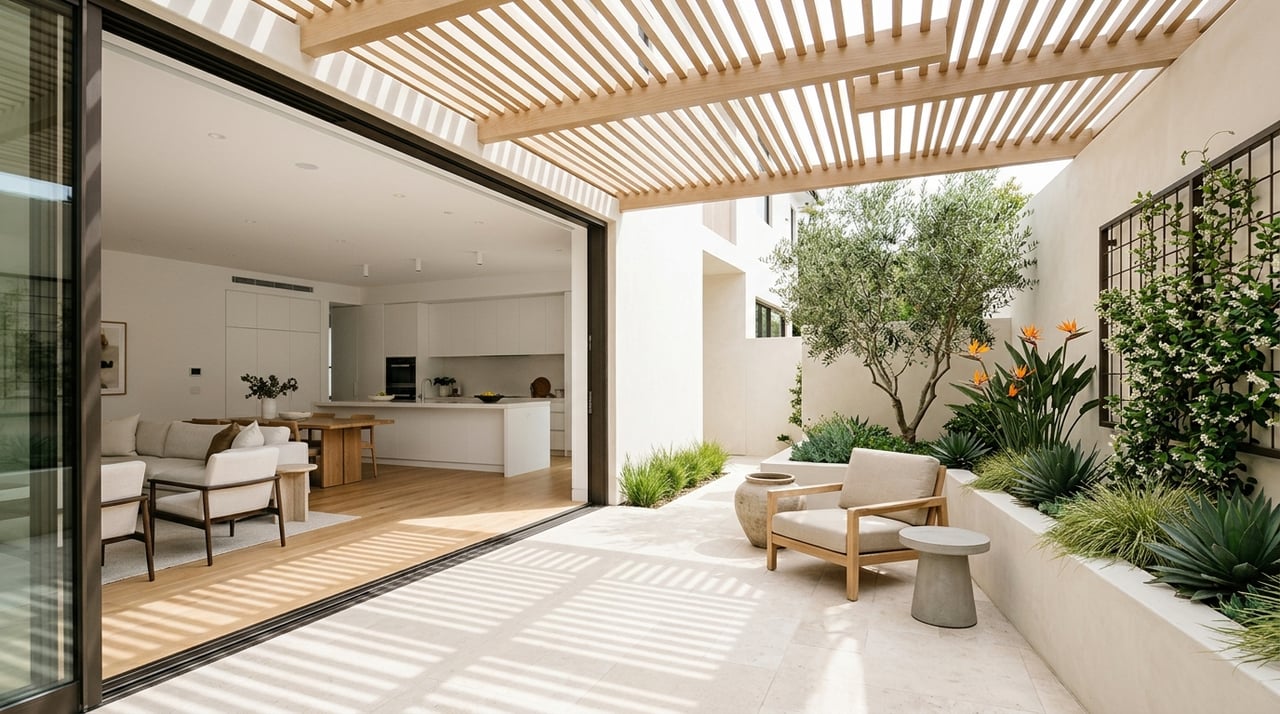
What if the most valuable part of your Newport Beach home is not more square footage, but how effortlessly it lets you live with the coast? In a place shaped by mild weather, beach access, and harbor views, indoor-outdoor living is not just a design trend. It is a practical way to make your home feel brighter, calmer, and more connected to its setting. If you are thinking about updating your home to enjoy it more now or position it well for a future sale, this guide will walk you through the features, costs, and local considerations that matter most. Let’s dive in.
Why indoor-outdoor living works in Newport Beach
Newport Beach is especially well suited to this style of living because the climate supports year-round use. NOAA data for Newport Beach Harbor shows 1991 to 2020 normals with an average daily high of 68.2 degrees, an average daily low of 57.3 degrees, and a mean temperature of 62.8 degrees. That kind of consistency makes patios, terraces, and open living spaces feel useful in everyday life rather than seasonal extras.
The setting also matters. The city notes that Newport Beach has more than six miles of ocean beaches and one of the largest recreational harbors in the United States. When your surroundings already encourage time outside, homes that blur the line between indoors and outdoors tend to feel especially natural.
Buyer interest supports that lifestyle. Zillow’s 2025 search trends found California among the top states for searches tied to balcony, patio, pool, and view. The same research noted growing interest in indoor-outdoor living, often over simply gaining more interior space.
In the luxury segment, the design preference is even clearer. Coldwell Banker Global Luxury reports that more than 60% of Luxury Property Specialists rank indoor-outdoor merging among their top three luxury design features. In Southern California’s temperate climate, outdoor lounges and dining areas continue to resonate strongly.
Start with flow, not features
The best indoor-outdoor homes do more than add a patio or a grill. They create an easy visual and physical transition from one area to the next. When you plan around flow first, each upgrade feels intentional instead of pieced together.
That usually means thinking about sightlines, access, shade, and how you will actually use the space. Do you want doors that open wide for entertaining? A quiet courtyard for morning coffee? A covered dining area that feels like an outdoor room? Those choices shape the project more than any single material or finish.
Houzz’s 2026 outdoor trends study reflects this shift. Outdoor areas are increasingly treated as true extensions of the home, with lounge areas appearing in 83% of redesigned outdoor spaces, dining areas in 55%, and quiet retreats in 53%.
Features that create the indoor-outdoor effect
Large sliders and glass walls
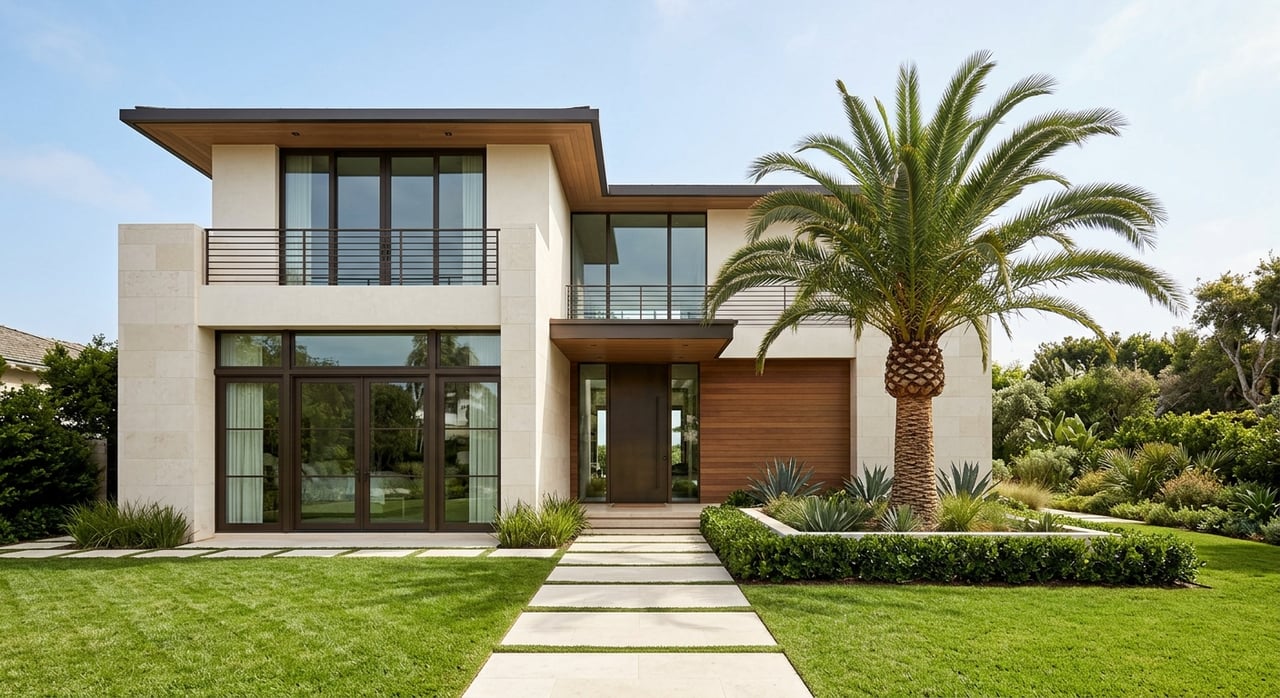
One of the simplest ways to create a stronger indoor-outdoor connection is to widen the opening between your home and the exterior. Large sliding doors and glass walls bring in more daylight, improve views, and make the yard or patio feel like part of the living space.
HomeGuide estimates sliding glass door installation at about $1,200 to $4,000, while replacement can range from $700 to $6,500. Budgets rise with larger spans, more panels, and higher-performance glass, but the payoff is often immediate in how open the home feels.
Patios and terraces
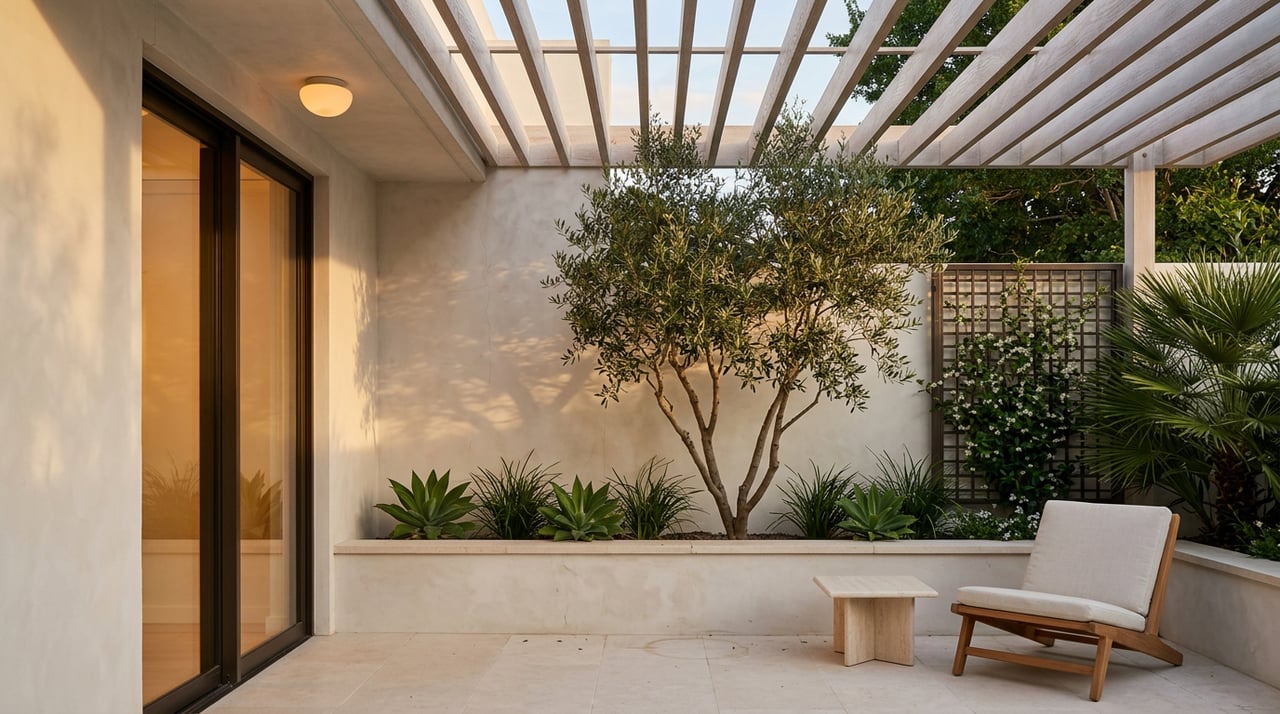
A well-designed patio can anchor the entire experience. It creates a place for dining, lounging, or simply extending your living area beyond the walls of the home.
HomeGuide says a standard patio typically costs $5 to $35 per square foot installed. For a 20 by 20 patio, the average range is about $2,000 to $14,000. Concrete tends to sit at the lower end, while pavers and natural stone push the budget higher.
Covered patios and shade structures
In Newport Beach, shade can be just as important as sun. A covered patio or shade structure helps you use the space more comfortably throughout the day and gives the outdoor area a more finished, room-like feel.
Houzz found shade structures rising to 35% of outdoor upgrades. For costs, HomeGuide estimates covered patios at roughly $25 to $95 per square foot, with roof attachment, finish level, and materials driving the range.
Outdoor kitchens and fire features
If you entertain often, outdoor kitchens and fire features can make the exterior feel like a true second living zone. They also align with current design preferences that favor spaces built for gathering, dining, and lingering.
Houzz reports that 12% of homeowners upgrading outdoor structures are adding or improving an outdoor kitchen. The study also notes that 68% are adding plumbing, electrical, or heating, while common kitchen features include grills in 85% of projects, beverage refrigerators in 62%, and sinks in 59%.
HomeGuide estimates a pre-built outdoor kitchen installed at about $7,000 to $16,000, while a custom build can range from $10,000 to $35,000. Outdoor fireplaces and fire pits also continue to show up as key pieces in lounge-style outdoor rooms.
Courtyards and quiet retreats
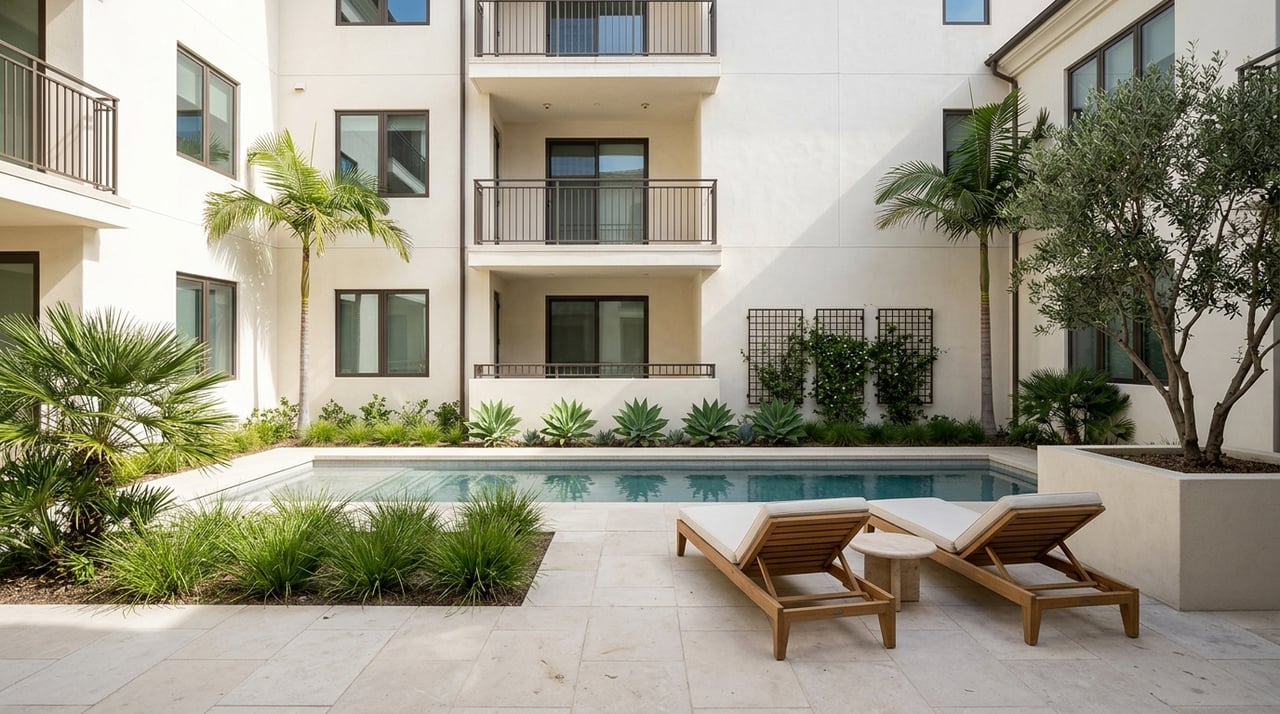
Not every outdoor space needs to be large to feel useful. Courtyards and compact private areas can work especially well as transition spaces between the house and the outdoors.
In a coastal setting like Newport Beach, these areas can offer a more sheltered experience while still capturing fresh air and natural light. They also match current preferences for quiet retreats and everyday-use spaces rather than formal outdoor areas that rarely get used.
Rooftop decks and view terraces
For some homes, the best outdoor room may be above the main level. Rooftop decks and view terraces can offer privacy, strong visual impact, and a direct connection to Newport Beach’s coastal setting.
Houzz found rooftop projects accounted for 8% of outdoor work in its 2026 study. HomeGuide estimates rooftop decks at about $35 to $120 per square foot, with roof condition, access, waterproofing, railings, and materials all affecting the final budget.
What feels current right now
Today’s outdoor spaces are being furnished and layered more like interiors. That means homeowners are moving beyond a basic patio set and thinking in terms of lounge seating, lighting, side tables, and a clear purpose for each zone.
Houzz points to several strong themes in current outdoor design:
- Lounge areas
- Dining zones
- Quiet retreat spaces
- Shade structures
- Outdoor lighting
- Fireplaces or fire pits
- Outdoor kitchens with utility connections
This matters because it changes how buyers and sellers think about value. A well-planned outdoor area can feel less like an add-on and more like a finished lifestyle space.
Budget with the full project in mind
One reason homeowners underestimate indoor-outdoor projects is that these upgrades often involve more than one trade. Even a relatively simple outdoor room may require glazing, paving, drainage, electrical work, shade elements, and sometimes plumbing.
That is why costs can vary more than expected. Materials are only one part of the picture. Site conditions, structural needs, access, and finish level all influence the final number.
Here is a helpful high-level cost snapshot:
| Feature | Typical cost range |
|---|---|
| Sliding or patio doors | $1,200 to $4,000 installed; $700 to $6,500 replacement |
| Ground-level patio | $5 to $35 per square foot |
| Covered patio | $25 to $95 per square foot |
| New deck | $4,000 to $16,000 average |
| Rooftop deck | $35 to $120 per square foot |
| Outdoor kitchen | $7,000 to $35,000 |
If you are planning improvements with resale in mind, it helps to prioritize the upgrades that improve everyday livability and make the home feel more complete.
Know the permit and coastal review rules
Before you begin work, it is important to understand Newport Beach’s permitting and coastal review requirements. The City’s Building Division says permits help protect safety and the value of your investment. It also notes that unpermitted work can reduce value, create insurance issues, or complicate a future sale.
There are limited exceptions. Newport Beach notes that some small projects, including platforms, decks, and walks that are 30 inches or less over grade, may not require a permit. Even then, other agency reviews may still apply.
For homes in the Coastal Zone, the process can be more layered. The California Coastal Commission states that development in the coastal zone generally may not begin until a Coastal Development Permit is issued. Newport Beach’s Local Coastal Program implementation code also says development in the Coastal Zone requires a coastal development permit from the City or the Coastal Commission unless exempt.
The practical takeaway is simple. If your project changes structures, expands living areas, or affects a coastal property, confirm the approval path early. That step can save time, money, and stress later.
How indoor-outdoor upgrades may help resale
For many sellers, the appeal of these projects goes beyond personal enjoyment. Thoughtful outdoor upgrades can also help a home feel more turnkey and more aligned with what buyers are already looking for.
Zillow’s 2026 analysis found that homes mentioning an outdoor kitchen sold for 4.4% more than expected, outdoor showers for 4.3% more, and outdoor fireplaces for 2.8% more. The same study found waterfront homes sold for 3.0% more and homes with docks for 5.4% more. While that is national data rather than Newport Beach-specific pricing, it supports the broader idea that lifestyle-driven outdoor features can add appeal.
In Newport Beach, the strongest strategy is often not adding more enclosed area. It is creating a home that feels brighter, easier, and more connected to the coastal lifestyle buyers already value.
A refined approach matters
The most successful indoor-outdoor spaces usually feel calm, cohesive, and easy to maintain. Clean lines, comfortable seating, subtle lighting, and durable materials often create a stronger result than trying to fit in every possible feature.
In Newport Beach, that often means choosing upgrades that respect the home’s architecture and the coastal environment around it. A wide opening to the patio, a shaded dining area, or a simple rooftop terrace can do a lot when the design feels balanced.
Whether you are preparing to sell or shaping a home you plan to enjoy for years, the goal is the same. You want outdoor space that feels truly lived in, not just staged for a photo.
If you are considering how indoor-outdoor updates could shape your home’s appeal in Newport Beach, Tracy Lenahan offers a thoughtful, design-aware perspective to help you decide what fits your property and your goals.
FAQs
Do Newport Beach indoor-outdoor projects usually need permits?
- Usually, yes. Newport Beach says permits protect safety and value, though some small platforms, decks, and walks 30 inches or less over grade may be exempt. Coastal-zone review may still apply.
What indoor-outdoor features feel most current in Newport Beach homes?
- Current trends point to lounge areas, dining zones, shade structures, lighting, fire features, and outdoor kitchens that make the exterior feel like a real extension of the home.
How much does a Newport Beach patio or covered patio cost?
- A standard patio typically runs about $5 to $35 per square foot installed, while a covered patio usually ranges from $25 to $95 per square foot depending on materials and construction details.
Are rooftop decks a good fit for Newport Beach homes?
- They can be, especially for homes where views, privacy, and outdoor entertaining are priorities. HomeGuide estimates rooftop decks at about $35 to $120 per square foot.
Can indoor-outdoor upgrades help Newport Beach resale appeal?
- They can support resale appeal by making a home feel more turnkey and lifestyle-oriented. Zillow’s national research found outdoor kitchens, outdoor showers, and outdoor fireplaces were associated with stronger sale performance than expected.